
Uncategorized
How Many Goats Per Acre?
Oct
How Many Goats Per Acre? Stocking Rate Guide for Healthy Pasture and Herds
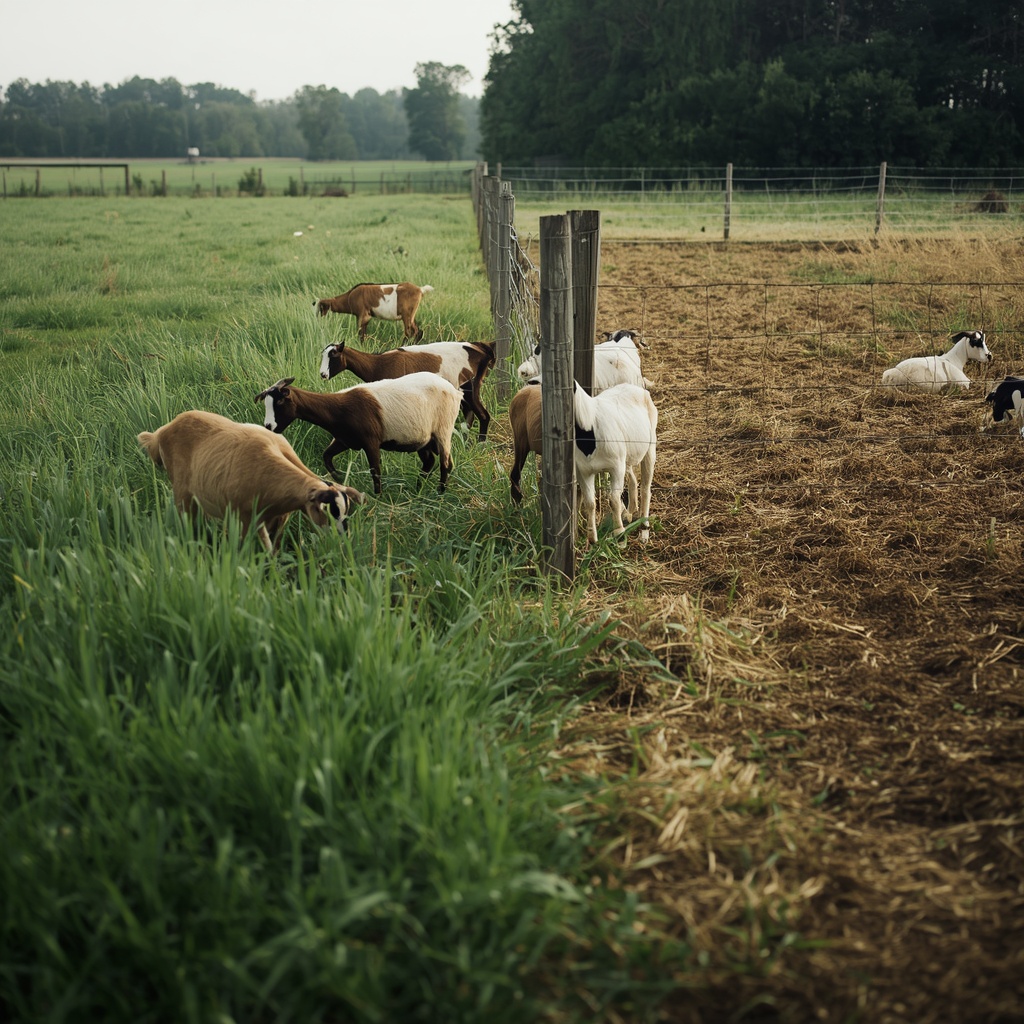
How many goats per acre can your land support? It is one of the most important decisions you will make before you buy a single animal, and the answers you find online range from one goat per acre to eight. That spread is not a mistake. Carrying capacity depends on your rainfall, soil, forage, and management. This guide explains the difference between stocking rate and stocking density, shows the animal unit formula extension offices use, gives realistic ranges, and lists the warning signs of overstocking, so you can size your herd with confidence.

How Many Goats Per Acre? Why the Answer Varies So Much
Online advice on how many goats per acre ranges widely. A county assessment guide lists 3 to 5 goats per acre, while another farm site suggests about six to eight goats per acre for the average farm. Both can be right in the right setting, and both can be wrong on your land.
The reason is that an acre is not a standard unit. An acre of irrigated, improved pasture with legumes can feed far more animals than an acre of dry, rocky brush. A temperate area with steady rain supports more goats than a desert region, where an acre may support one goat or fewer.
The safest approach is to treat published numbers as ranges and calculate your own. The same source that suggests higher densities also notes that it is almost always better to have lower stocking rates than higher.

Stocking Rate vs Stocking Density
Two terms are often mixed up. Stocking rate is the amount of land per head over the whole year, while stocking density is the space within a grazing area per head. Rate is the long-term question of how many goats your farm can carry. Density is how crowded a paddock is on a given day.
You can run a high density in a small paddock if you move the herd often and give each paddock a long rest. That is the idea behind rotational grazing. Your yearly stocking rate still has to match the total forage your land grows.
Beginners should focus on rate first. Decide how many goats your whole property can feed across the year, including winter when pasture stops growing, then plan paddocks and rotations inside that limit.
The Animal Unit Formula
Extension offices use animal units, abbreviated AU, to compare animals of different sizes. One AU equals 1,000 pounds of live animal. As one Nebraska extension publication explains, a 150-pound goat equals 0.15 AU, or about six to seven goats per AU.
Carrying capacity can then be estimated with a formula. The goat extension network gives it as acres times forage and browse production per acre times seasonal utilization, divided by daily intake times the length of the grazing season. In plain language: how much usable forage you grow, divided by how much your goats eat.
Here is an illustration only. Suppose a 10-acre pasture can support one AU for every two acres across the year, which is five AU. At about 6.7 goats per AU, that is roughly 33 goats, or about 3.3 goats per acre. Your own county extension agent can tell you the real acres-per-AU figure for your soil and rainfall.
Typical Ranges by Land and Climate
Good, well-managed pasture in a wetter region can often support the higher end of the range, but only with rotation and parasite control. Marginal or dry land supports far less. Brushy ground is harder to predict, because goats eat browse that cattle skip, and stocking rate is more difficult to predict where there is brush.
Breed and size matter too. One source suggests that a Boer goat farmer should limit the herd to six per acre, while up to eight Nigerian Dwarf or Pygmy goats may be kept per acre. Larger breeds like Nubian and Saanen eat more and should be stocked more lightly.
Goats can also be added to existing grazing. Nebraska extension notes that most producers have been able to add one goat per cow to their operation without having to change much, because goats prefer different plants. That is a useful starting point for farms that already run cattle.
How Overstocking Hurts Your Goats
Parasites are the main danger. Goats ingest worm larvae from the grass, and crowded, short-grazed pasture puts more larvae in reach. Overstocking and parasite load go hand in hand, which is why good guides tie stocking rate to controlling internal parasites and preventing over-crowding.
Overgrazing also damages the land. Plants cannot regrow, weeds move in, soil erodes, and your feed bill rises as the pasture fails. Recovery is slow, so it is cheaper to start low and add goats later.
Watch for warning signs: bare ground, goats eating weeds down to the soil, thin animals, rough coats, pale eyelids, and repeated worm problems. If you see them, reduce numbers, rest the pasture, and talk to your veterinarian.
Space, Shelter, and Fencing
Pasture is only part of the answer. Goats need dry, draft-free shelter, and extension guides commonly recommend roughly 10 to 15 square feet of covered space per adult goat. Add a separate area for kidding pens and for isolating sick animals.
Fencing decides whether your stocking plan works. Goats test fences constantly, so use tight woven wire or well-built electric fencing, and make paddocks easy to open for rotation. Poor fencing leads to escapes and to goats eating neighbors’ gardens.
Finally, give goats something to climb and explore. Simple platforms, logs, or pallets keep them active and calm and reduce fence pressure. Mental stimulation is a small cost with a big payoff in herd behavior.
A Step-by-Step Way to Choose Your Herd Size
First, measure your usable pasture and subtract the house, barn, and unusable ground. Second, ask your county extension office or the Natural Resources Conservation Service for typical acres per animal unit in your area. Third, calculate the number of goats using the AU formula above.
Next, start with fewer animals than the maximum. Begin with a small group, watch pasture condition through a full season, and add goats only if the land recovers well. Record fecal egg counts and body condition so you can see problems early.
When you are ready to buy, choose healthy animals from a seller who explains health records and delivery up front. A smaller herd of sound goats will outperform a crowded herd every time.
Conclusion
So, how many goats per acre? The honest range is wide, from one on poor land to several on excellent pasture, and the right number depends on your forage, climate, and management. Use the animal unit formula, ask your local extension office, and start low. Watch the pasture and the goats, and adjust. To see available goats, browse the rest of the collection at orderlivestock.com.
Frequently Asked Questions
How many goats can you have on one acre?
Many guides list about three to eight goats per acre on good pasture, but dry or brushy land supports far fewer. Your local extension office can give a more accurate figure.
How many acres do I need for 10 goats?
Using a rule of roughly three to four goats per acre on good pasture, 10 goats need about two to three acres, and more on poor land. Start low and watch the pasture.
Does rotational grazing allow more goats?
It can improve forage use and parasite control, but the yearly stocking rate still has to match the amount of forage your land grows.
Can goats and cattle share a pasture?
Often yes. Goats eat different plants than cattle, and many producers add one goat per cow without major changes.
What are signs of overstocking?
Bare ground, thin goats, rough coats, pale eyelids, and repeated worm problems are warning signs.
Ready to start or grow your herd? Browse our goats for sale, including Boer goats for sale, Nigerian dwarf goats for sale and Nubian goats for sale.
Further reading: American Goat Federation.
