 Skip to content

Brown Swiss Cow
Price range: $269.99 through $720.00
A dependable dairy breed known for strength, longevity, and high-quality milk. Brown Swiss cows produce milk rich in protein and butterfat, making them excellent for cheese and dairy processing. Calm-tempered, hardy, and well-suited to various climates—an ideal choice for efficient, long-term milk production. 🐄
Brown Swiss Cow
Brown Swiss cows are a hardy, long‑lived dairy breed from the Swiss Alps, prized for high‑quality milk, calm temperament, and excellent cheese‑making ability.
What Are Brown Swiss Cows?
Brown Swiss cows (also called Braunvieh or Swiss Brown) are a dairy cattle breed that originated in the mountainous regions of Switzerland thousands of years ago. They are known for their light‑to‑dark brown coat, strong build, and milk that combines good volume with high fat and protein for premium cheese production.
Quick facts about Brown Swiss cows (targets “facts” keywords from your file):
-
Brown Swiss cows are considered one of the oldest dairy breeds in the world.
-
They were imported from Switzerland to the United States in the 19th century and are now found worldwide.
-
Average mature cows weigh around 1,400–1,500 pounds and are larger than many other dairy breeds.
-
Their milk typically has about 4 percent butterfat and 3.5–3.8 percent protein, ideal for cheese.
Brown Swiss Cow Appearance and Physical Characteristics
-
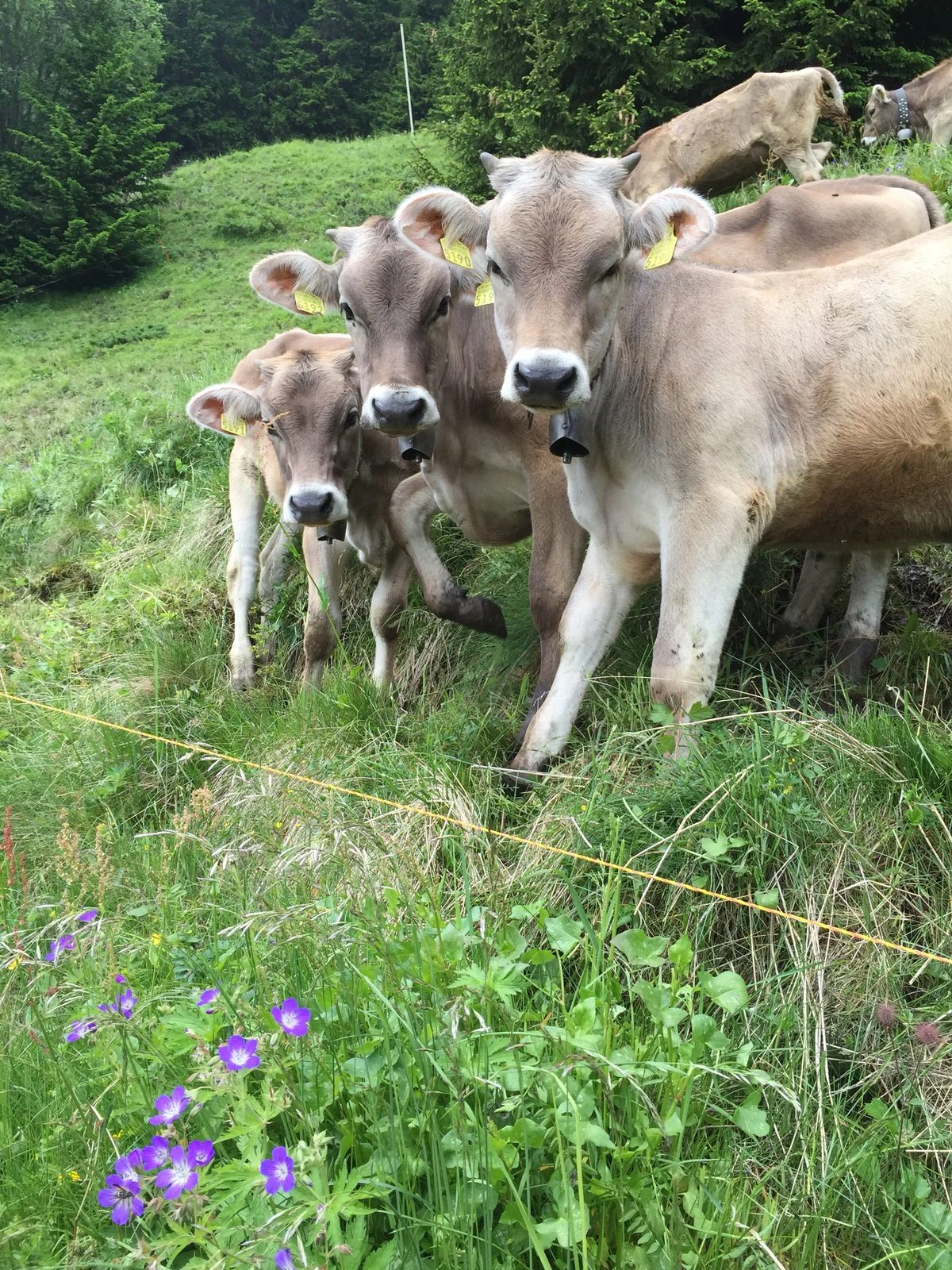
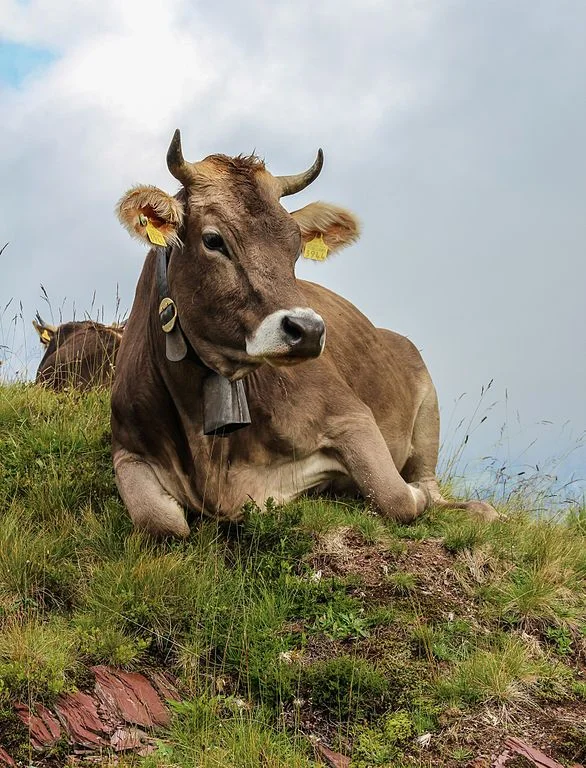
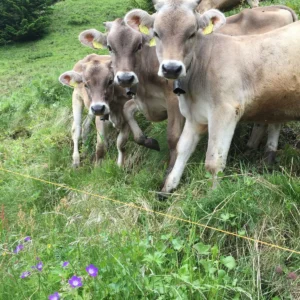
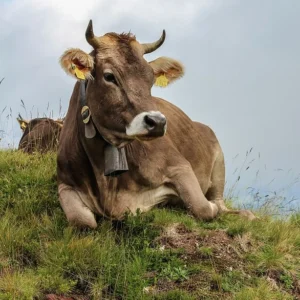
Color of a Brown Swiss cow: The coat ranges from light silvery brown to dark chocolate brown, often with a creamy white muzzle and dark nose.
-
Eyes and pigmentation: They have dark eye pigmentation that helps protect against intense sunlight in high mountain pastures.
-
Size and height: Brown Swiss cows are large, deep‑bodied animals with strong frames; mature cows commonly weigh about 1,400–1,500 pounds and stand taller than many dairy breeds.
-
Horns or polled: Traditionally horned with short, white horns that darken at the tips, but polled (naturally hornless) animals are also bred.
-
Distinctive look: Their black hooves, muzzle, and tail switch, combined with a broad head and gentle expression, make them easy to recognize.
Origin and History of the Brown Swiss Cow
-
Swiss Alpine origins: Brown Swiss cattle developed on the steep slopes and valleys of northeastern Switzerland, with evidence of similar cattle dating back around 4,000 years.
-
Oldest dairy breed: Dairy historians frequently describe Brown Swiss as one of the oldest dairy breeds still in existence.
-
From triple‑purpose to dairy specialist: In the past, Braunvieh cattle were used for milk, meat, and draft work; in countries like the United States they were selectively bred mainly for dairy traits, evolving into the modern Brown Swiss dairy cow.
-
Global spread: The breed spread from Switzerland to North America and other parts of the world in the 19th and 20th centuries and now appears in many dairy regions, from Europe and North America to tropical environments.
Brown Swiss Cow Milk: Production, Quality, and A2
Milk Production
-
Average volume: Within organized dairy systems, Brown Swiss cows often produce roughly 7,000–10,000 kilograms (about 15,000–23,000 pounds) of milk per 305‑day lactation.
-
Daily yield: That equates to roughly 20–25 liters of milk per day for a well‑managed Brown Swiss cow, though actual yields vary by genetics, feed, and management.
-
Persistency: Brown Swiss cows are known for steady, persistent milk curves across lactation rather than sharp peaks, which simplifies feeding and herd management.
Milk Quality and Butterfat
-
Butterfat and protein: Brown Swiss milk typically has around 4 percent butterfat and about 3.5–3.8 percent protein, higher in protein than many common dairy breeds.
-
Cheese‑making advantage: The favorable fat‑to‑protein ratio and casein profile (including Kappa‑Casein BB and a high share of Beta Casein A2/A2 in some lines) make their milk excellent for cheese yield and quality.
A2 Milk and Taste
-
A2 genetics: Breeding programs report a high proportion of Brown Swiss sires with the Beta Casein A2/A2 variant, so many Brown Swiss cows can produce A2‑type milk, though each animal must be tested individually.
-
Taste: Their milk is often described as rich and creamy because of the butterfat and protein contents, which many consumers associate with a pleasant flavor, especially in cheese and yogurt.
Brown Swiss Cow Temperament, Traits, and Uses
Temperament and Behavior
-
Docile nature: Brown Swiss cows are widely recognized for their calm, gentle temperament and are often described as easy to handle.
-
Adaptability: They adapt well to different climates, rough terrain, and varied forage, from Swiss mountain pastures to intensive dairy systems and warmer regions.
-
Longevity: Brown Swiss cows commonly have long productive lifespans, with more lactations on average than several competing breeds.
Main Purposes and Uses
-
Dairy focus: Today, Brown Swiss are primarily used as dairy cows, valued for high lifetime milk production and favorable milk composition.
-
Cheese production: Because of their milk’s protein structure and fat‑to‑protein balance, they are especially popular where milk is processed into cheese.
-
Dual‑purpose potential: In some regions, Brown Swiss and Braunvieh lines still retain good beef qualities, making them useful in cross‑breeding with beef breeds to produce calves for meat.
Brown Swiss vs. Holstein and Jersey
| Feature | Brown Swiss cows | Holstein cows | Jersey cows |
|---|---|---|---|
| Origin | Switzerland, Alps region. | Northern Europe (Netherlands/Germany). | British Channel Island of Jersey. |
| Primary use | High‑quality dairy, strong for cheese‑making. | Very high‑volume milk production. | High butterfat milk, often used for rich dairy products. |
| Average milk volume | High, but generally less than Holstein; excellent lifetime yield. | Highest milk volume among dairy breeds. | Lower volume than Holstein, moderate overall. |
| Fat and protein | Around 4% fat and 3.5–3.8% protein. | Good volume, slightly lower solids vs Brown Swiss. | Very high butterfat, high solids. |
| Temperament | Very calm and docile. | Active, can be more nervous. | Generally docile but more energetic than Brown Swiss. |
| Body size | Large, strong, long‑lived cows. | Very large framed, high‑producing cows. | Smaller, compact dairy cows. |
| Notable advantage | Longevity, feet and legs, cheese milk, adaptability. | Maximum milk volume per lactation. | Exceptional butterfat for cream and specialty products. |
Pros and Cons of Brown Swiss Cows for Farmers
Advantages
-
High‑quality milk for cheese: The combination of solid milk volume with strong fat and protein levels makes Brown Swiss milk profitable where milk is priced on components or processed into cheese.
-
Longevity and durability: Strong feet, legs, and overall structure help Brown Swiss cows stay productive for more lactations, spreading rearing costs over many years.
-
Calm temperament: Their gentle nature makes them easier to manage on family farms and in robotic or large dairy systems.
-
Adaptability: The breed copes well with mountainous terrain, harsh climates, and a range of feeding systems.
Possible Disadvantages
-
Slightly lower peak volume than Holsteins: Farms strictly paid on volume may see higher output from Holsteins, even if Brown Swiss milk has better solids.
-
Large body size: Their size can mean higher feed intake and may require stronger infrastructure than smaller breeds.
-
Availability in some regions: In areas dominated by other breeds, it may be harder to find Brown Swiss breeding stock or specialized advisers.
Common Questions About Brown Swiss Cows (FAQ)
What is a Brown Swiss cow?
A Brown Swiss cow is a large, hardy dairy breed from Switzerland that produces high volumes of milk rich in fat and protein, especially suited for cheese‑making.
Where are Brown Swiss cows from originally?
They originated in the mountainous regions and valleys of northeastern Switzerland and are considered one of the world’s oldest dairy breeds.
Are Brown Swiss cows friendly?
Yes, Brown Swiss cows are widely praised for their calm, gentle temperament, making them easy to work with on both small and large farms.
How much does a Brown Swiss cow weigh?
Mature Brown Swiss cows typically weigh around 1,400–1,500 pounds, while bulls are heavier, reflecting their large‑framed build.
How much milk does a Brown Swiss cow produce per day?
Depending on genetics, nutrition, and management, a Brown Swiss cow commonly produces about 20–25 liters of milk per day, adding up to many thousands of liters per lactation.
What is Brown Swiss milk used for?
Because of its balanced fat and protein and favorable casein profile, Brown Swiss milk is especially valued for cheese production, but it is also used for drinking milk, yogurt, and other dairy products.
Related products
CATTLES
CATTLES
CATTLES
CATTLES
CATTLES
CATTLES
CATTLES

Reviews
There are no reviews yet.